Heart Shaped Uterus
Heart Shaped Uterus

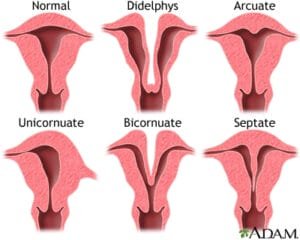
A heart shaped uterus is an anomaly condition known as a bicornuate uterus where the uterus is split into two horn-shaped cavities resembling the heart shape. This condition occurs due to failure of fusion of the Müllerian ducts in fetal life. Although most women with a bicornuate uterus do not have obvious symptoms, some may have issues with menstruation, fertility, and pregnancy.
What You Should Know About a Heart-Shaped Uterus
A heart shaped uterus is when the uterus has two cavities rather than one. This is a congenital anomaly, and it is rare (0.1% to 0.5% of women).
What Are the Causes of a Heart-Shaped Uterus?
This is an abnormality associated with failed fusion of the paramesonephric ducts (Müllerian ducts) during embryo formation. These ducts eventually develop into the female reproductive tract, which includes the uterus. If they fail to fuse completely it results in a bifurcated or heart shaped uterus.
What Are the Symptoms of a Bicornuate Uterus?

Most women with a bicornuate uterus will be asymptomatic and don't find out until being imaged for something else or experiencing reproductive issues.
However, some may experience:
- Irregular vaginal bleeding
- Dysmenorrhea (painful menstruation)
- Dyspareunia (pain during intercourse)
- Recurrent miscarriages
- Preterm labor
However, it is important to emphasize that despite being characteristic of a bicornuate uterus, these symptoms can also be due to different underlying conditions. For this reason, a proper medical evaluation is essential.
Effect on Fertility and Pregnancy
A heart shaped uterus usually doesn't impact a woman's ability to conceive. But it can affect the outcome of pregnancy. It may come with a few complications, including:
This can affect the implantation and growth of the embryo and could result in a higher risk of
- Miscarriage: Irregular shape of the uterus: An irregularly shaped uterus can hinder the implantation and development of the embryo.
- Preterm Birth: The smaller size of the uterine cavity might not support adequate growth of the fetus at term, predisposing the pregnant female to preterm labor.
- Breech presentation: An abnormal shape can chock fetal movements resulting in positions other than vertex such as breech presentation that would require a cesarean section.
Diagnosing a Heart Shaped Uterus
The diagnosis of a bicornuate uterus is usually made by imaging studies which includes:
- Ultrasound: A transvaginal ultrasound can offer detailed images of the uterine structure.
- MRI: Provides detailed imaging which can help differentiated between a bicornuate uterus and other uterine anomalies.
- Hysterosalpingography: A special X-ray that can show the shape and openness of the uterus and fallopian tubes after contrast dye is injected into the uterus and fallopian tubes.
Treatment Options
Treatment is not always required, particularly if the woman is symptom free and not having reproductive difficulties. But for those who are having complications:
- Surgical correction: A procedure called metroplasty may reconstruct the uterus to a more usual shape, which could lower the chances of miscarriage and preterm birth.
- Increased Monitoring During Pregnancy: A higher-risk pregnancy may necessitate increased monitoring, with additional ultrasounds and prenatal check-ups to help keep complications and health risks in check.
In fact, there are many women living with a Bicornuate Uterus.
Many women with a bicornuate uterus have normal reproductive lives. The key is awareness and proactive management. Consultation with a gynecologist or fertility specialist should be regular so that all your doubts are clarified and you can plan healthy pregnancies.
Here are a few real-life adventures:
Miracle Baby for Olympia Valance
Olympia Valance opened up about multiple miscarriages and several rounds of IVF in Australia. Diagnosed with a bicornuate uterus, she would never have any children — that’s what they told her until she found out she was pregnant.Image: Ella Jane Without an orgasm, she has no clear answer on paper. At 25 weeks into an unexpected natural pregnancy, she was ready to welcome her baby boy. Her story is one of resilience and hope while navigating the landscape of fertility.
Reference: Miracle Baby for Olympia Valance
It’s Christina, High-Risk Pregnancy
Christina Furnival, who had a bicornuate uterus, had a high-risk pregnancy. The story can be difficult, but after everything, she went through, she carried her baby to full term sharing her journey to help give hope to other parents with the same diagnosis.
Reference: It’s Christina, High-Risk Pregnancy
Meg's Full-Term Success
Meg, from the Factual Fairy tale blog, was diagnosed with her bicornuate uterus during her first pregnancy. She had complications, but eventually carried her baby to term, and shared her story to help others.
Reference: Meg's Full-Term Success
Community Experiences
The women on the “What to Expect” forums have shared their stories about having a bicornuate uterus. One user described how she labored naturally until she needed a c-section, when doctors discovered her bicornuate uterus.
Reference: Community Experiences
These stories serve as reminders that although a bicornuate uterus may bring with it some challenges, there are numerous women who have made it through pregnancies with this condition.
Thank You

This article aims to shed more light on the heart-shaped uterus. Here at GYNMORA, we believe in empowering you with full information for your reproductive health.
FAQs
It is quite common for people with a bicornuate uterus to have a healthy pregnancy.
Yes, most women with a bicornuate uterus have safe pregnancies. But some complications are more likely to occur, so their healthcare provider should keep a close eye on them.
What are bicornuate uterus complications, diagnosis, and treatment?
A bicornuate uterus is heart-shaped with two cavities and other anomalies such as a septate uterus have structural deviations. Correct diagnosis is key to proper treatment.
Does a bicornuate uterus always need surgery?
No, surgery is often not performed unless a woman has recurrent pregnancy loss or complications. In fact, most women with this condition will not need surgery.
How does a bicornuate uterus affect periods?
Not usually. Most women with this condition have normal menstrual cycles. But some people may have a more painful time of the month.
How common is a bicornuate uterus?
And it is quite rare in occurrence about 0.1% to 0.5% of women.
Overall Purpose
The heart-shaped uterus is also an essential term for a woman who experiences reproductive difficulties. It can present some risks for women during pregnancy, but under the right medical supervision and care, many women who have


Comments
Post a Comment